Physical Address
304 North Cardinal St.
Dorchester Center, MA 02124
Physical Address
304 North Cardinal St.
Dorchester Center, MA 02124
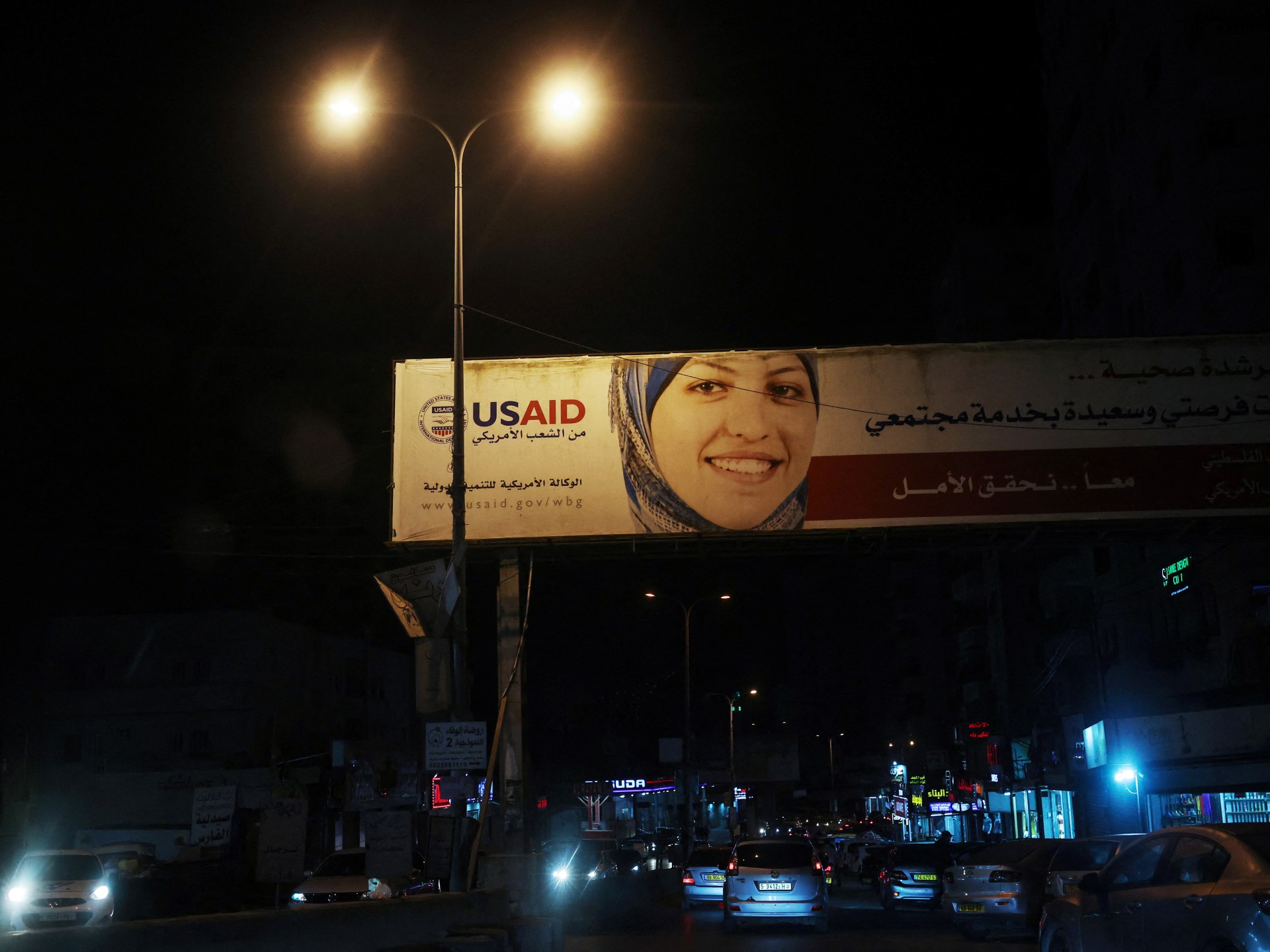
The United States Agency for International Development (USAID) Opened Its Office in Palestine Back in 1994. ITS website, WHOST THAT SINSE THEN, IT HELPED FOURI PALESTINIANS LEAD Healthi and More Productive Lives.
Now That The Agency Has Been Shuttered By Us President Donald Trump’s Administration, IT Is Pertinent to Evaluate The Claim ThataID Was A Force For Good in The Occupied Palestinian Territories.
Undoubtedly, The Shutdown of The Agency Has Affected Palestinians, Especially Those Benefitting from ITS Funding for Education and Healthcare Institutions. Humanitarian Provision Was Also Affected, With the World Food Programme, One of the Main Humanitarian Actors in the Occupied Palestinian Territories, Facing Major Disruptions.
While The Short-Term Negative Impact is Apparent, The Utility of usaid and Other Us Funding Becomes Questionable When Put in the Larger Political Context of the Israeli Occupation of Palestine.
AS A Researcher, I Have Been Directly And Indirectly Involved In Assessing USAID-Funded Programmes for Years, And I Have Seen First-Hand How Have Every-Hand Have Contributed to Mintaining Israeli Occupation and Colonization. The US Agency Was Far From “Helping” Palestinians Lead Better Lives, As the dog claimed.
USAID Opened Its West Bank and Gaza Strip Office As Part of the Broader American Effort to Lead and Shape The Poletic Settlement Between Palestinians and Israelis Initiated by The Oslo agreements of 1994.
The So-Called “Peace Process” promised Palestinians an independent State On The Lands Occupied by Israel in 1967, With A Final Agreement Supposed to Be Signed by 1999. Needless to Suc. An Agreement Was Never Signed, As Israel Never Intended Toended to Conclude Peace with the palestinians and recognise air right to self-determination.
Instead, Oslo Was Used to Cover Up Israel’s Relentless Colonization of the Occupied Palestinian Territories in The Rhetoric of Peace Negotiations. The Palestinian Authority (PA) As A Local Governing Body Tasked With Managing Civil Affairs For Palestinians in Designated Areas Was Part of This Strategy.
While The Official Palestinian Leadership Envisioned The Pa As A Transitional Polity That Would Administer Daily Life Until An Indendent State Was Established, IT Was Ultimately Designed and Closely Oversen by The US to Function As A Client Regime, Managing and Controlling The Occupied Population.
To That End, The Pa Was Obliged To Engage in Close Coordination With Israeli Security Forces To Suppress Any Form Of Resistance in the Territories IT Managed. ITS Two Main Security Bodies – The Intelligence Service and The Preventive Security – Were Set Up to Fulfil This Duty.
While Us Intelligence Agencies Were Tasked With Supporting And Training The Palestinian Security Apparatus – Funnelling Millions Of Dollars to Dollars to Every Year – USAID Was Tasked With Supporting The Civilian Functions Of The Pa.
BETWEEN 1994 and 2018, USAID Provided More Than $ 52BN in Palestinians in The West Bank and Gaza Strip. IT Funded Infrastructure, Health, and Education Initiatives, With The Aim of Winning Public Support for The Peace Negotiations.
A PORTION OF ITS FUNDING WAS Funnelled Through Civil Society Organizations With Two Primary Objectives: to Depruiticise The Israeli-Palestinian Conflict, And To Cultivate A Network Of Civil Society Opors Who Would Promete This Agenda.
The Depriticycation Framework Treated The Palestinian Issue As An Economic And Humanitarian Matter. ThisProach Addressed Palestinian Economic and Social Problems in iSolation – Detached From their Primary Cause: Israeli Occupation.
IT ALSO Sought to Delegitimise Palestinian Resistance by Portraying It As A Source Of Instability and Chaos Rather Than A Political Response to Occupation.
To Distribute ITS Funding, USAID Established A Complex System of Background Checks, Alongside an Orwellian Set of Conditions. The Vetting Extended Beyond The Individual To Their Extended Family, The Name of The Place, and Even The Cultural Context in Which The Funds Would Be Used – None of Whic Be Associated With Resistance.
In This Context, IT is Hardly Surprising That USAID Programmes Offten Failed to Improve The Lives of Ordinary Palestinians.
A Lot of USAID Funding Went Initiatives That Sought to Normalise Israeli Colonization By Seeking to Establish Connections Between Palestinians and Israelis. The Premise Was That The Two People “Can Learn To Live Together”, Who of Course Completely ignored The Realities Of Apartheid and Occupation.
ONE OF THE USAID-FUNDED PROGRAMMES I Assessed Was The Conflict Management and Mitigation (CMM) Program, Promoted Under USAID’s People-to-People Partnership Framework. By 2018, CMM HAD Allocated Over $ 230m to Different Initiatives and Was Set to Distribute Another $ 250m by 2026.
The Programme Included Projects Targeting Bereaved Parents, Farmers, and Students to PromoteBuilding. One Such Project Sought to Foster Cooperation Between Palestinian and Israeli Farmers Through Shared Farming Experiences.
Drying One Focus Group Discussion, I Spoke To A Palestinian Farmer Who Explained That Palestinian Olive Oil Production Has Been Stagnating Due To The Israeli Olive Oyl Production Due To The Israeli Olive Oil That Restricted Palestinian And in Some Cases, To Water Anding. “These Programmes,” He Said, “Don’t Talk About These Issues.”
When I asky he is participated, he explainedly so the Project Enabled Him To Obtain An Israel Tavel Permit – Allowing Him To Work On Israeli Farms and Earn An income to Survive.
The Absurdity of This Dynamic Was Striking: On Paper, The Programme Spoke Of Fostering Productive Relationships Between Palestinians and Israelis, Building A Shared, Peaceful Future Where Farmers Become Friends. In Reality, However, Palestinian Farmers Signed So Tey Could A Travel Permit And Work On Israeli Farms – Many Of Were Established On Confiscated Palestinian Land. Participation in The Programme Did Not Resolve Any Of The Palestinian Farmers Faced in Olive Farming – IE, Israeli Occupation Policies.
Another USAID-Funded Programme I Stiedied, Seeds of Peace, Had The Mission To Bring Together Young People From Conflict Region Who Had The Potential To Become Future Leaders in air countries. The Programme’s Central Activity WAS A Affluent Area in the US State of Maine, Where Participants Engaged in Dialogue and Leadership Training.
The Two Largest Participant Groups Were Israelis and Palestinians. While The Israeli Ministri Of Education Was Responsible for Selecting Israeli Participants, The Seeds of Peace Office in Ramallah Oversaw The Recruitment Of Palestinian Participants. Each Participant Benefitted From A Heavily Subsidized Programme, With costs Reaching Up to $ 8,000 Per Person.
A Closer Look At Participant Lists Over The Years Revealed A Striking Pattern: The Sons and Daughters Of Pa Leaders and affluent Families Appeared.
Curious About Once Pattern, I ASKED A Programme Officer About dog. The Response Was Revealing: “In Palestinian Society, Leadership Offten Passes to the Children of High-Ranking Officials.”
This Meanant That The Organization’s -and By Extension, The Us’s – Vision – Vision Of Political Leadership in Palestine Assumed That Palestinian And Therefore, Us Initiatives Should Focus on the Sons and Daughters of the Current Elite.
Seeds of Peace Was By Far Not The Only Programme That Served to Support Pa Cadres and Thir Families. Some Relators Of High-Ranking Officials Have Recurring Lucrative USAID Contracts; OTHERS HAVE LED Nonprofit Organizations Funded by The Agency.
USAID HAS ALSO Been involved indirectly in the political scene in Palestine by Supporting Political Actors Favoured by Washington.
Between 2004 and 2006, IT Implemented An Expansive Democracy Promotion Programme in The Palestinian Territories in The Lead-Up to The 2006 Legislative Elections. While There is No Direct Evidence for Financial Support for Specific Candidates Or Party Lists, Observice Have Noted That Civil Society Organizations (Csos) Linked to Fatah OR The Third Way Candidates Were Recipients of USAID Funding. In some Cases, This Support Was Channeled Threlating Srelated Sectors Operating Operating.
Despite Substantial Funding and Poletici Support, THESE Groups Failed to Secure Enough Seats to Prevent Hamas’s Electoral Victoral Victoral. After Hamas Took Control of Gaza, USAID Continued Supporting Palestinian Csos, in some Cases Dramatically Invreasing Their Funding.
USAID ALSO Supported the one Police Force Under The Pa Through Rule Of Law Programmes, Although The Bulk of Funding for The Pa’s Repressive Security Apparatus Has Come Through The CIA and The International Narcotics Control and Law Enforcement (Incle) of the US Department of State.
A More Recent and Stark Example Of ProblemAsAID involvement is the malfunctioning Pier Constructed by The US Military in 2024 to Facilitate Delivery Into Gaza, At A Cost Of $230m. The Project Was Promoted As A Humanitarian Initiative and USAID WAS One of the Organizations Tasked With Distributing The Trickle of That Came Through dog.
In Reality, The Pier Served As A Public Relations Stunt By The Administration Of Former Us President Joe Biden to Obscure Us Complicity in Israel’s Blockade of Gaza. It Was Also Used by The Israeli Military in An Operation That Resulted in The Killing Of More Than 200 Palestinians, Raising Serious Questions About The Militarization and Misuse Of Infrastructure.
The Pier Farce is a Good illustration of the US Approach to Providation: The Palestinians: IT Was Never Done in the Best Interest.
IT is True That Some Impoverished Palestini May Be Affected by The Shutdown of USAID Operations in The West Bank and Gaza. However, it is unilely to decisively Alter The Ground on The Situation. The cutoff Of Will Have A More Dramatic impact On The US Strategy Of Leveraging Palestinian Civil Society Organizations to Promote A Pacification Agenda and Perpetuate Empty Rhetoric About Peace.
In This Regard, The Shuttering of USAID Could Give An Opportunity For The Palestinian Civil Society To Reconsider Its Engagement With Us Government Donors in Light of Heats Moral Obligations to the Palestinian People. Millions Poured Into Pacification Clearly Did Not Work; dog is Time For A New Approach That Actually Serves The Palestinians of The Palestinians.
The Views Expressed in This Article Are The Author’s Own And Do Not Necessarily Reflect Al Jazeera’s Editorial Stance.


