Physical Address
304 North Cardinal St.
Dorchester Center, MA 02124
Physical Address
304 North Cardinal St.
Dorchester Center, MA 02124
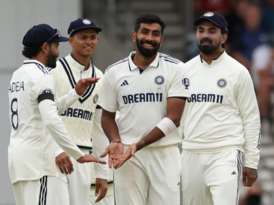
The recently completed England / India Test Series Went Beyond Virtually’s Expectations Competitive, Utterly Absorbing, Five Matches. The Commentators Roared Their Approval The Unpredictable Twists and Turns, The Improbable Come-Backs; The Sublime Skills Displayed by The Likes of Shubman Gill, KL Rahul, Rishabh Pant, Joe Root and Harry Brook; And Performing the Bravery Of Three Players, In Turn, With A Broken Finger, A Fractured Foot Bone And A Dislocated Shoulder.
High Level Praise has been Sum Sung About A Number of Recent Test Series; And Yet this Continues to Have a Freudian undertone. There is an apprehension test cricket may well be doomed – At Least, in the Form We know – With the Timing Being Uncertaining But Far to be off. Every Day of the Enthraling Test Match Lived Through Is Accompanied by this dread. The Mixture of Emotions May Cause Many Cricket Enthusiasts to Being of Danger Of Being Overcome by Virtual Paralysis.
This May Well Apply Of The Likes: Huw Turbervill, James Coyne, Melinda Farrell and The Stalwart of David Frith The Cricketer Magazine; Ae Housmann, A Sage Bibliophile; Tiana Ealdred, A Recent debutant on The Cricket Web site; Former England Captain, Michael Vaughan and His Coach Duncan Fletcher; Jon Hotten Of The Nightwatchman Journal; Former England Player and Recent Commentator Isa Guha; Vishnu Padmanabhan of The Economist Magazine; In Ireland, Recent International Player Clare Shillington; In Australia, Ronald Cardwell and Julee of the Horan Between Wickets Journal; Greg Baum of The Age Newspaper in Melbourne; And in New South Wales, The Writer of Biographical Tomes, Peter Lloyd; In The USA, Kylan Watson of The Philadelphia Tribune; Sean Gregory of Time Magazine; In The West Indies, Vaneisa Baksh; In The Teaming City of Lahore with ITS 14 Million Residents, Sports Journalist and Commentator Mirza Iqbal Baig; In Sri Lanka, Srian Obeyesekere; In India, Former Test Luminary Turned Eminent Commentator Ravi Shastri; In South Africa, Journalist and Commentator Natalie Germanos; In China, Saurabh Mukerjee Shanghai Daily Newspaper, and Mike Chan South China Morning Post; In Greece, Joseph Nikitas, President of The Hellenic Cricket Federation (Based in Corfu); In Kenya, Lameck Onyan Former National Player and Currently The Head Coach Of The Women’s National Team; In Afghanistan, Writer Timeri N. Murari; And in Zimbabwe, Craig Irvine The Current Captain of The National Men’s Team; And in South America, Hernán Pereyra, President of Argentine Cricket Association; Whilst Not Forgetting That Stemote South Atlantic Archipelago and Cecil Alexander, Captain of The Falkland Islands Team.
Not All Test Series During The Post-Covid Pandemic Pandemic, 2023 to the present, Have Been Hotly Contested, A Number Only Soot. And it is in this respect that I propose Change to the Game’s Regulations The Incidence of One-Sided Contests, Raise Spectator Enjoyment, and Lessen The Perceived Existential Threat To Test Cricket.
My Proposal A Limit On The Number Over The Number Team’s First Innings, Setting This Maximum 100 Or 110 – What, Typically Day’s Play Plus 18, Overs Play Up A Further 1 hour and 20 Mins, OR 2 hours and 4 minutes, of Playing Time (Based on A Grand Average Tests for The Past Two and a Half Calendar Years, at 13.6 overers Being Delivered Per Hour).
Those Maxima Overs to Be Received Were An Educated Guess What Would Be Reasonable Limits to Impose and So I Have Tested These “Working Hypotheses” by Investigating Their Likely Impact. This has been by taking The Match Results and Innings-by-Innings Statistics for the Major Test Participant Country Team from The Start of 2023 (Calendar Year) Through to the present, With A Cut-Off 6th August. These Teams Being Those of England, Australia, South Africa and India, Being the Four Biggest Guns of Post-Covid Times.
The Focus has been on Establishing, for The Teams’ First Innings, Taken Together:
Findings
In Summary:
| 100 plus overers (41 cases) |
| 25 WINS (61% Total Cases) – 19 Big (46% Total Cases) |
| 6 Losses – 3 Small, 2 Moderate, 1 Large |
| 10 Draws – 4 Due to High Scoring Match, 6 Due to Bad Weather |
| Note: 14 Wins When Batting First – 12 of Them Big |
| 11 Wins When Batting Second – 8 Big |
| 110 plus overers (28 cases) 16 WINS (57%) – 12 Big (43%) 4 Losses – 2 Small, 1 Moderate, 1 Large 8 Draws – 4 Due to High Scoring, 4 Due to Bad Weather Note: 11 Wins When Batting First – 10 Them Big |
The Proportional Findings For The 100 And 110 Over Limits Are Similar, The Notable Differences Being A Slightly Higher Percent of Wins and Big Wins With The Former Of It Expansion Of Half.
The details Contained On A Conventional Spreadsheet Are Available on Request to The Author.
A Restriction Down to 90 Overs has not been looked Into, As Would Make A Test Match Format Seeming Too Much Like a Two Innings (Two-Day) ODI Match.
CONSEQUENTIAL IMPACTS
The Principal Impact of SCENARIOS is a High Frequency of Matches Dominated by One Team and a More OR Less Inevitable (OR foregone) Conclusion Well Before the Match (Not My Experience BUT I am A “Test Nut”) Would Be Alleviated; And Hence The Overall Level of Enjoyment Drived From Watching The Match Would Be Raised.
This Might Help to Alleviate The Perceived “Threat” of the Demise Cricket.
There are a number of other, beneficial, ramifications to be recognised:
Note That From 2020 Through to End 2024, The Other Eight Tests England, Taken Together, Batted at Leisurely (Average) Rate Of Run Over – Equivalent to 55 Runs Per 100 Faced Delivers Faced.
In Conclusion:


